A defensible, practical UV Exposure Management plan for your workplace
Workplace UV audits, risk assessments, policies and PPE assessments — assessed against SafeWork Australia guidance and Australian Standards, and documented in a way that actually holds up.
2 in 3Australians diagnosed with skin cancer by age 70
2.4MWorkers regularly exposed to solar UV on the job
2×Higher skin cancer risk, outdoor vs. indoor workers
AnnualRecommended review cadence
Everything you need to identify, manage and document UV risk
Engage SpotRisk for one service, or the full picture.
Workplace UV Audits
On-site assessment of UV exposure across tasks, roles and locations.
UV Risk Assessments
Documented risk ratings measured against SafeWork Australia's guidance.
UV Management Plans
A practical action plan your business can actually put into place.
Sun Protection Policies
Written policies that meet your WHS duty of care — not generic templates.
PPE Assessments
Checking hats, clothing, eyewear and sunscreen against Australian Standards.
Shade Assessments
Reviewing natural and built shade across your sites and work areas.
Compliance Reviews
Checking existing controls against your current obligations.
Annual Exposure Reviews
Keeping your plan current as work, sites and standards change.
What's involved in a workplace UV audit
A structured, on-site assessment — not a guess. Here's what typically happens, from first call to final report.
Pre-audit consult (20–30 min)
We learn about your sites, roles, shift patterns, existing PPE and any current sun protection policy.
Site walkthrough (typically half a day per site)
We observe tasks at the times they actually happen, and check shade, reflective surfaces and PPE in use.
Worker consultation
Short conversations with a cross-section of workers — what's actually used day to day, not just what's on paper.
Assessment against the standard
Findings measured against SafeWork Australia's UV guidance and relevant Australian Standards.
Report & action plan
A clear, prioritised set of recommendations — practical enough to actually implement.
⏱ Most single-site audits take half a day on site, with your report and action plan delivered within two weeks.
How to prepare for your audit
You don't need to tidy up beforehand — an honest picture is more useful than a staged one. It helps if you have:
- A list of outdoor tasks, roles and rough hours spent outdoors
- Any existing sun protection or PPE policies on hand
- Current PPE available for on-site review
- A few workers available for a short conversation during the visit
Isn't this just common sense?
It's a fair question. Sun protection isn't a secret — a lot of what's recommended genuinely is common sense. Where it gets more complicated is turning common sense into something that's consistent, documented, and actually gets done.
Left to "common sense"
- Relies on individual judgement — varies person to person, site to site
- No dated record if a claim or inspection asks what was done
- Easy to deprioritise behind rosters, incidents and deadlines
- Reflected UV, seasonal changes and PPE ratings are easy to miss without training
- “We told people to wear a hat” isn't a risk assessment
A SpotRisk Audit
- One consistent standard applied across every site and role
- A dated audit, written policy and action plan on file
- A booked visit and report — the job gets finished, not forgotten
- Assessed against SafeWork Australia guidance & Australian Standards
- Independent, evidence-based, and built to be actually used
How often should you review?
SafeWork Australia doesn't set a fixed number of months — but it does require your risk assessment stays current, and is reviewed whenever your work, sites or conditions change.
Ad hocReviewing only when someone remembers — the most common approach, and the least reliable.
AnnuallySpotRisk's recommended baseline — captures new starters, sites and seasonal changes, and keeps PPE current against Australian Standards.
Every 5 yearsToo infrequent for a hazard that changes with your workforce, sites and the seasons each year.
Review sooner if:New site or teamChanged work or rostersIncident or near missPPE updated
Does it need to be done on site, or can it be remote?
Both — depending on what's needed. The physical audit is always done in person; much of what follows can be delivered remotely.
On-Site
The Physical Audit
There's no substitute for standing in the work area at the time the work happens.
- Checking shade, reflective surfaces and site conditions firsthand
- Observing tasks and PPE in use, in real time
- Short, informal conversations with workers on site
Remote & Ongoing
Advisory & Support
Ideal for multi-site and regional businesses, once the site picture is established.
- Policy drafting and PPE assessments (photos or samples supplied)
- Report review and action plan sign-off
- Toolbox talks delivered online, plus phone & email support
Which workplaces need a UV Exposure Management plan?
Most relevant for any workplace where staff spend part of their day outdoors — even seasonally, or for part of a shift.
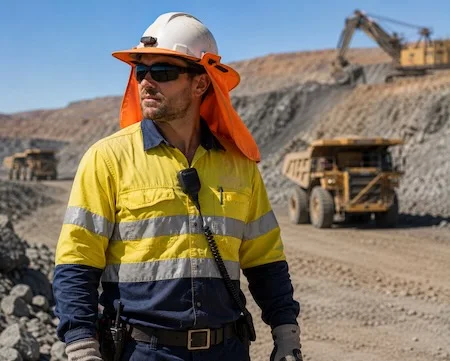
Mining & Resources
Harsh, high-exposure environments.
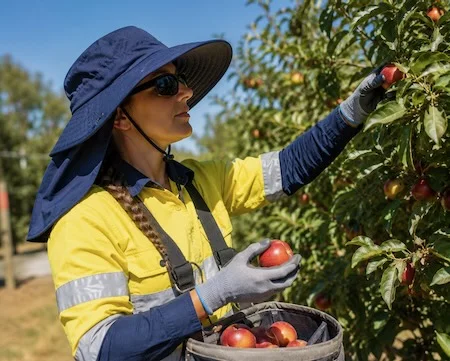
Agriculture & Regional
People who work on the land, every day.
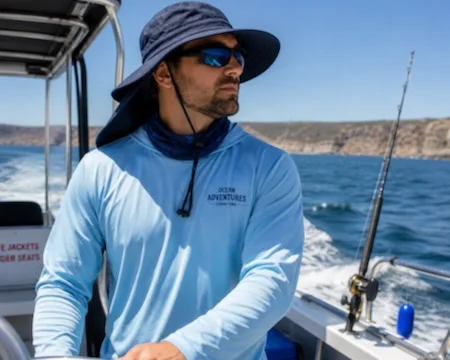
Outdoor Recreation
Staff and visitors, on the water and on land.
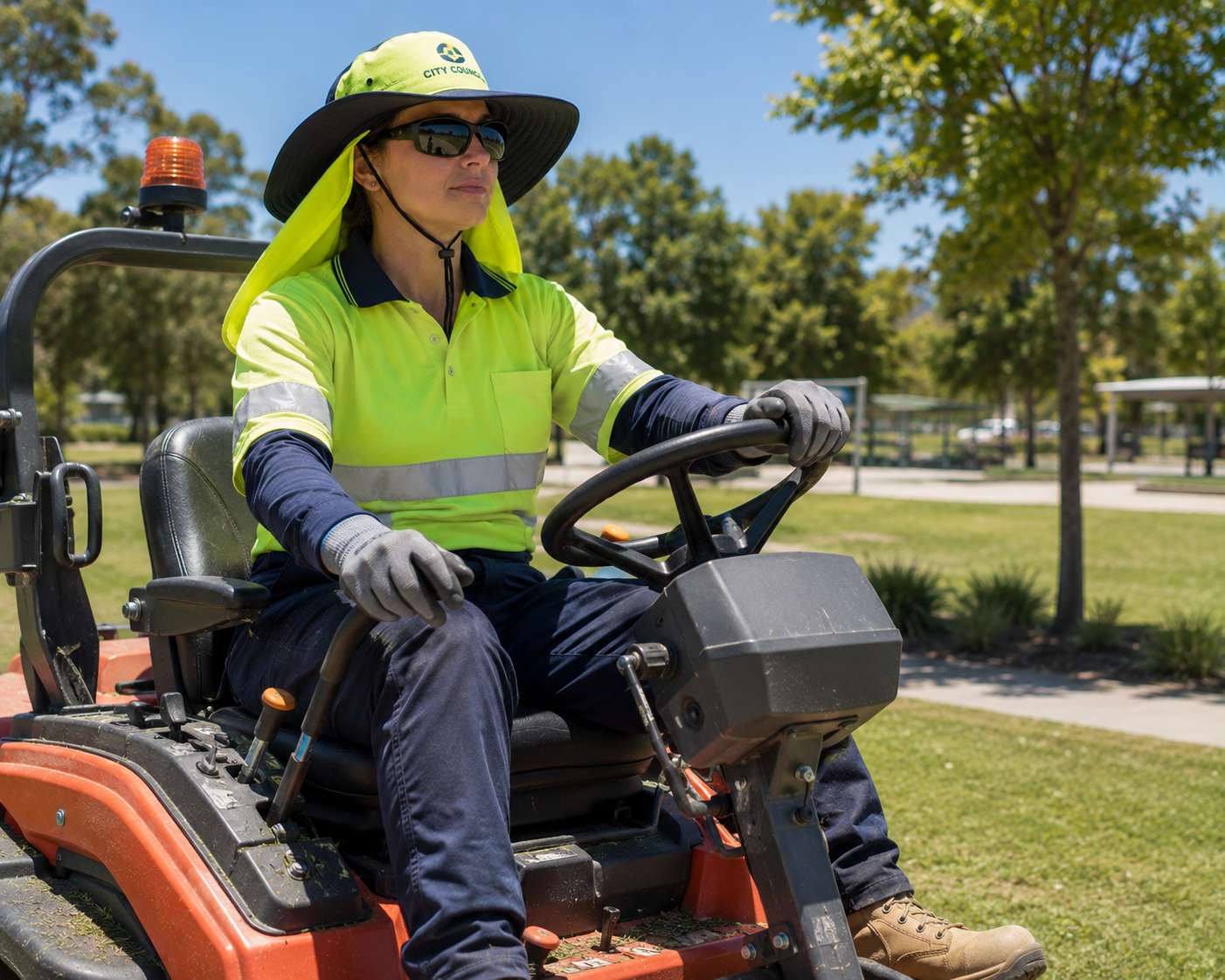
Parks, Gardens & Landscaping
Full shifts spent in direct sun.
Is UV risk the same everywhere in Australia? No — but every state needs a plan.
UV levels follow latitude and season. Darwin and Cairns sit at extreme levels most of the year; Hobart and Melbourne are lower through winter but reach Very High to Extreme in summer; Adelaide, Perth and Brisbane see Extreme UV for several months each year. Cancer Council Australia recommends sun protection whenever the UV Index reaches 3 or above — a level every capital city reaches for part of the year. The need for a plan doesn't disappear in southern states; it just shifts with the seasons, and your audit is timed accordingly.
Darwin & Cairns — extreme, year-roundAdelaide, Perth & Brisbane — extreme in summerMelbourne & Hobart — very high to extreme in summer
Isn't PPE sold as sun-safe already fit for purpose?
Not necessarily. Being marketed as "sun-safe" doesn't automatically mean an item meets the standard your workplace needs, or suits the job it's being used for.
| PPE Item | Standard to check | Common pitfall |
|---|---|---|
| Sun-protective clothing | AS/NZS 4399 | “UV protection” on the label doesn't always mean a tested UPF rating |
| Sunglasses / eyewear | AS/NZS 1067 | Blocks glare, but may not filter UV transmission properly |
| Hats & hard hat brims | Coverage check | Doesn't shade the ears and neck, or no brim/flap fitted |
| Sunscreen | SPF 50+ broad spectrum | Right SPF, but degraded after months in a hot vehicle |
| All of the above | Fit for the job | Technically compliant but too hot or awkward — so it stays in the ute |
Free Resource: Outdoor Worker SunSmart PPE Guide
A practical one-page guide covering the 8 essentials of sun-safe PPE — what to wear, why it matters, and a checklist to run before every outdoor shift.
Why Harriet started SpotRisk
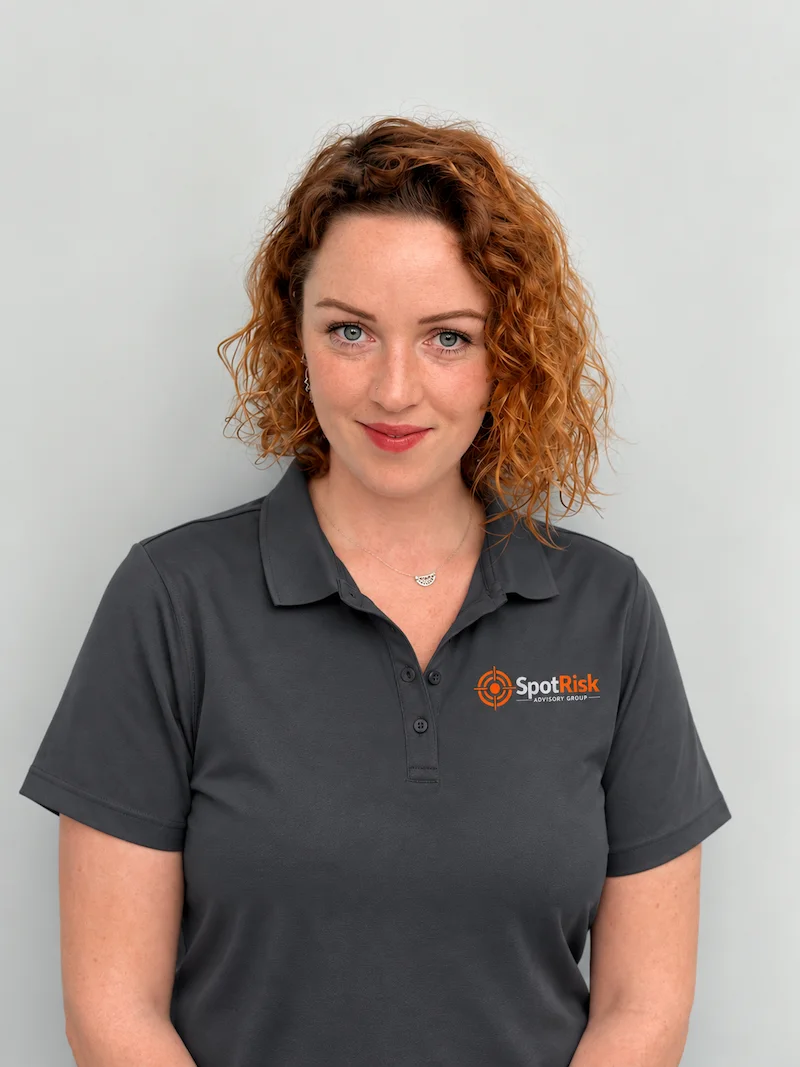
"In clinic, I saw the outcome of exposure that had built up over years — sometimes decades — before anyone thought to address it. By the time it shows up as a diagnosis, prevention isn't an option anymore. That's exactly why I started SpotRisk: to help workplaces act while prevention is still on the table."
Harriet Clayton — Founder, SpotRisk Advisory Group
Before founding SpotRisk, Harriet spent her career as a Nurse specialising in skin cancer prevention and the delivery of national workplace health programs. She's seen firsthand what unmanaged UV exposure costs — and built SpotRisk to help workplaces get ahead of it.
Ready to manage UV exposure in your workplace?
Wherever you're based in Australia, get in touch — we'd love to help.